 brandinginfotech
This is a common mistake made by many. You purchase a mosquito trap, turn it on and a week later, mosquitoes appear in the mosquito trap. Good news, right? Until they’re not the ones that have been biting you.
The trap usually isn’t faulty. But mosquitoes are not one pest! There are approximately 400 species in India and the few that cause us nuisance at home have about as different a behavior as a crow and a pigeon. One trap might be as ineffective as another against one of them.
So, why traps play favourites, and how you can counteract it.
Who Are the Main Mosquito Species in India?
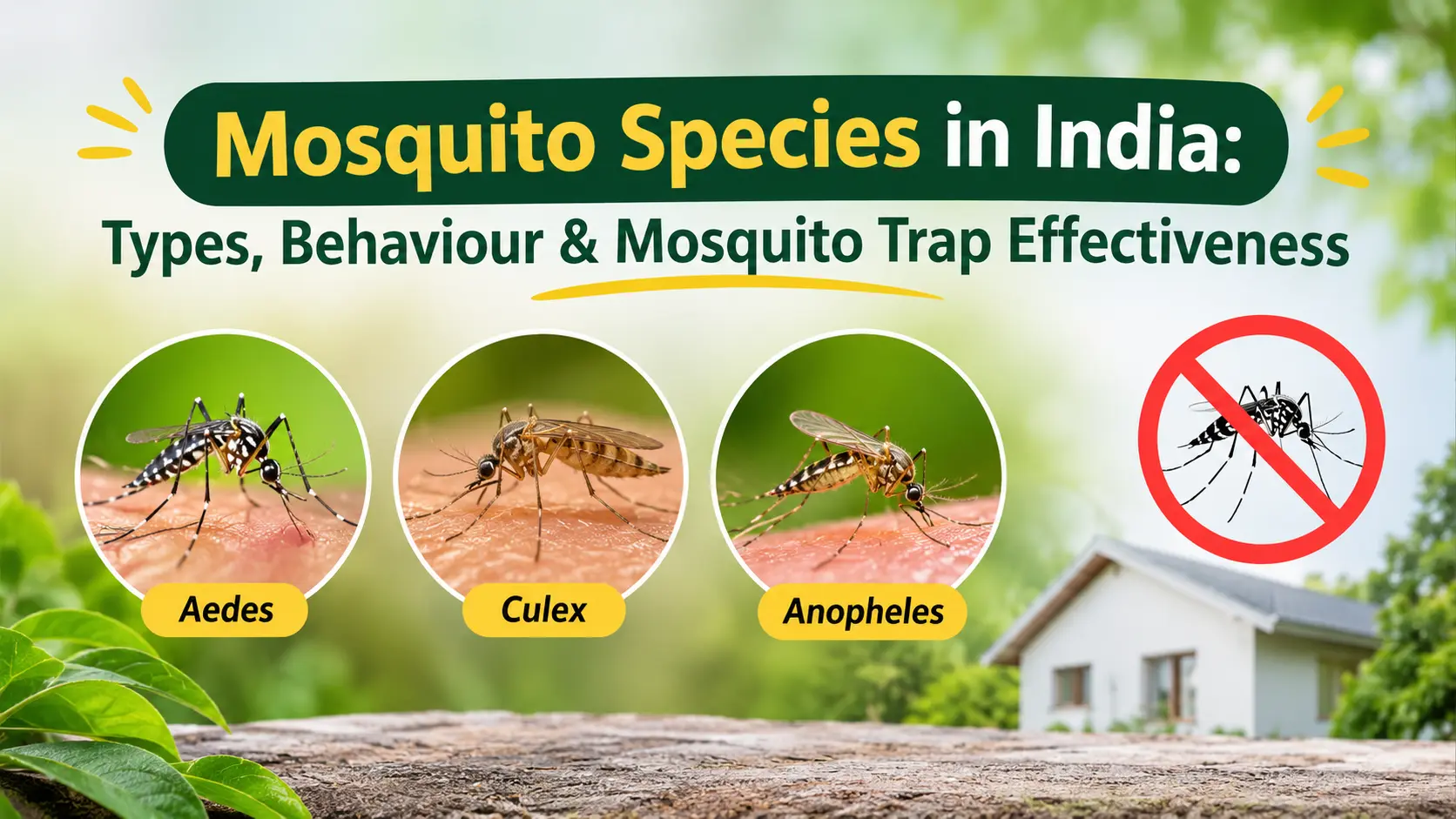
Three mosquito groups are responsible for most of the trouble indoors. The stripy-legged one is Aedes (mainly Aedes aegypti, occasionally Aedes albopictus), which bites during the day and is a vector for dengue and chikungunya. The plain brown house mosquito is called Culex, and typically Culex quinquefasciatus and appears at dusk, breeds in drains and can transmit lymphatic filariasis. Malaria is the disease of the genus Anopheles. The mosquito to be known in Indian cities is Anopheles stephensi which is happy in tanks and containers and An. culicifacies is more of a village and paddy-field type mosquito.
Various time, various flavors, various nurseries. Any trap is created based on saying one of those lifestyles.
How does a trap trick a mosquito?
A female mosquito is searching for blood. She first detects the carbon dioxide in your breath, which she can detect from afar. Then skin chemicals such as lactic acid help her zero in. It is confirmed by the heat and moisture, and when she finally makes it to the end, her eyes are drawn into it.
Traps take logs along that trail. Some only pray and wait. Some emit CO₂ or a human odor. A few do not have any blood, and play the game of a puddle that is not worth laying eggs in. No matter what a trap is, it only works on species that are interested in that trick. It’s really the only thing and all that that follows is a variation of it.
Do they know they are awake?
Aedes is a daytime feeder. It’s heaviest at early morning and late afternoon. Culex, and most Anopheles, come out at dusk and are active at night.
Now consider how many traps are likely to be found – in a bed room – on – at night – when it is switched on. It’s a meeting point for the night crew, and a miss for Aedes. If you are concerned about dengue, a night-time trap is looking for the wrong mosquito at the wrong time.
Is light energy real?
The general impression is that the mosquitoes dive, as do the moths. Mostly they don’t. Sometimes Culex and Anopheles will venture toward the UV or LED light, but body heat and breathing generally prevails when there is an asleep human in the room. Hunting by sight and warmth during the day, aedes is indifferent to the glow of a tube.
That is why light only traps will catch numerous midges and moths and few mosquitoes. That is also why the mosquitoes that are inside are more likely to be night feeders.
What are their favorite foods?
Aedes aegypti is a people specialist and is a comfortable house dweller. Culex will bite us, too, but will take a bird or a buffalo. Cattle are preferred hosts for many species of Anopheles which show greater willingness to bite humans in the urban species such as stephensi.
Thus, a CO₂-activated trap will attract a larger number of people while a CO₂ + Person-activated lure will attract the people-lovers. If the species isn’t attracted to the bait, it will simply fly past, up to a metre in distance.
Where do they lay their eggs?
Not all traps lure a thirsty mosquito. They hunt for one that is seeking a place to lie down, and here the species really divide.
Aedes are looking for small amounts of clean water: plant saucers, desert coolers, spare tyres, buckets, after the rain, a bottle cap. Culex does not want the opposite, dirty water in drains, water-logged septic tanks. Anopheles prefers clean, stagnant and slow-moving water like wells, pools, paddy fields and construction pits.
A gravid trap that contains rotting organic matter doesn’t smell and is a five-star hotel for Culex, but not for Aedes. The other way round of the above is what’s called an Ovitrap and is what health workers use to monitor Aedes.
Have you installed it correctly?
Often this is the real culprit. Aedes is skulking, crawling low and in dark areas: under beds, behind curtains, in cupboards. Culex will remain in the low-light corners and near drains. After feeding, some Anopheles lie on the walls of the house and others creep outside the house.
An Aedes may never encounter a trap located on a high shelf in the center of a room.
In the center of a room with a high shelf may not encounter an Aedes. If any design, a trap next to a drain will be inclined to Culex. Of course, it’s not just about design. A suction trap does not require the mosquito to land as it requires airflow and draws it towards the trap in what it catches; sticky traps require the mosquito to come into contact with the trap surface. However, a species bias can appear as a placement bias.
A quick cheat sheet
| Species | Most active | Breeds in | What tends to work |
|---|---|---|---|
| Aedes aegypti / albopictus | Daytime | Water in clean containers, small containers. | A trap that uses an odour lure and is operated during the day. |
| Culex quinquefasciatus | Night | Stagnant and dirty water, drains. | Gravid traps, suction traps at night |
| Anopheles species | Night | Clean or slow flowing water | Bait stations and light, close to breeding and resting areas |
This is an approximation only. All of this nudges it: Season, city or village, and the way your home stores water.
Which one(s) do you have in your house?
Do not waste money on something that you can’t see. Aedes aegypti has striped black and white legs, and a lyre-shaped mark on the back. Gray and feasting on human flesh at night? Probably Culex. An Anopheles is one that is lying on its back, with its tail sticking up, like it’s doing a handstand.
If the dengue has been in the area, presume Aedes and start looking for water that has accumulated around your house. Primarily bitten at night, near drain or sewer pipe? Think Culex. If you can’t tell or in an outbreak, check with your local municipal health office.
Getting better results
First, identify the primary species, then select appropriate bait. Install the trap accordingly: low and in the shade for Aedes, near water drains for Culex. Get rid of standing water weekly as there is no better trap than removing the breeding ground. Use screens, nets and repellents as back-ups. And be patient. Numbers don’t come in a day.
So, have you got a problem with your trap?
Probably not. When it collects a lot of one mosquito and nothing else, it’s just saying to you what kind of habits it shares. When you know which species of the mosquitoes live in your space, selecting the type of trap, and determining where to place it becomes much easier.
If you’d like hand-matching protection for your home, take a look at lifeshield.in.
