 brandinginfotech
Here’s how most people handle mosquitoes: they see one in the evening, get annoyed, maybe swat it, maybe reach for a spray. That’s about as far as it goes.
But by the time you’re swatting an adult mosquito, the problem already happened. Days ago. Somewhere you weren’t even looking.
Mosquitoes don’t just show up out of thin air. They go through several stages before they ever become the thing biting your ankle, and nearly all of that happens in water — often water you’d never think twice about. One forgotten container, left alone for a week, and suddenly you’ve got a full-blown mosquito situation on your hands.
If you’re managing a large property — a farm, a resort, a factory, a school, a warehouse, any kind of outdoor space — this isn’t just trivia. It’s honestly the difference between actually fixing the problem and just spraying the same corner every few days forever.
Four Stages, and Water Runs Through Three of Them
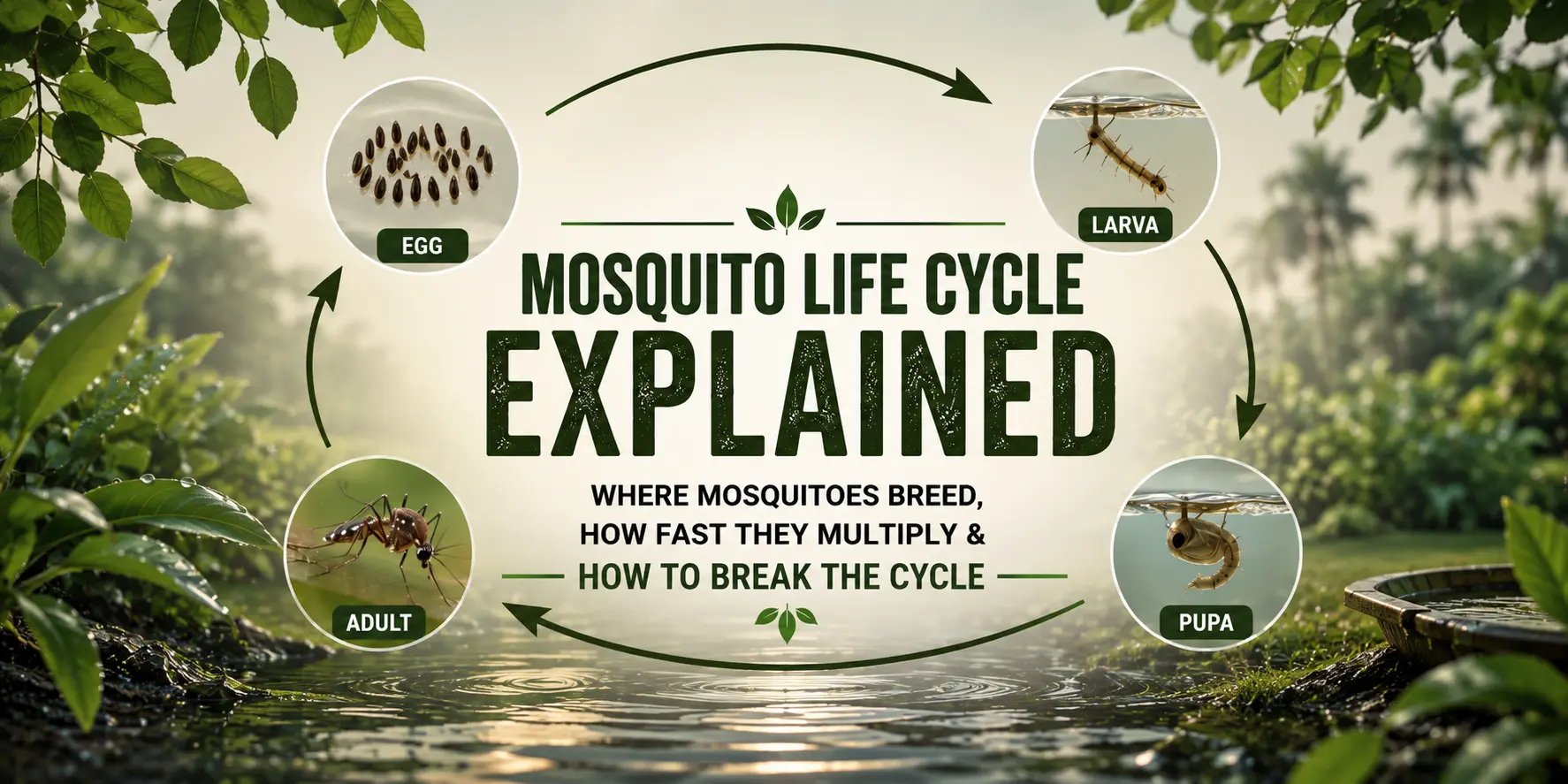
Egg. Larva. Pupa. Adult. That’s the whole cycle. The first three stages happen in or right next to water. Only once a mosquito becomes an adult does it finally leave the water and start looking for food, and eventually, a mate.
Give it warmth, moisture, and some still water, and this whole process moves fast. Uncomfortably fast, honestly. Which is exactly why mosquito numbers seem to explode a few days after a good rain.
Stage One: The Egg
A female lays her eggs — sometimes right on the water, sometimes along the edge, sometimes in a spot that’s bone dry right now but is going to flood the next time it rains. That last one trips people up constantly. A patch of ground can look totally fine today and turn into a breeding site the moment the sky opens up.
Where do they show up? Buckets. Plant trays. Open tanks. Blocked drains. Old tyres. Gutters. Storage containers. A puddle nobody bothered to notice. And here’s the part that really throws people off — some eggs can just sit there, dormant, waiting for water to show up. So an area that seemed perfectly clear last month can suddenly have mosquitoes the week after a heavy rain, even though nothing “new” actually happened there.
Stage Two: The Larva
Once eggs hatch, out come the larvae — sometimes called “wrigglers,” because, well, that’s exactly what they do. They can’t fly yet. They just sit in the water, coming up now and then to breathe.
This is actually the useful stage for control purposes, because unlike a flying adult, a larva is stuck right where it hatched. Find larvae in standing water, and you’ve found the breeding site itself — not just evidence of one.
Don’t get comfortable after clearing a single spot, though. On any decently sized property, there’s almost always another water source sitting nearby that nobody’s gotten around to checking.
Once mosquitoes reach adulthood, understanding how CO₂ mosquito traps work can help property owners manage adult mosquito activity around outdoor areas.
Stage Three: The Pupa
The larva turns into a pupa next — still in the water, no longer feeding, just finishing the last leg of its transformation. This stage moves quicker than the others, but don’t let that fool you into thinking it’s minor. Once it’s done, that mosquito is airborne and ready to start the whole cycle over again.
Stage Four: The Adult
This is the one everybody actually notices. Because this is the one that bites.
After it emerges, the mosquito needs a little time before it’s fully active. And here’s something people don’t usually know — males and females feed differently. Many females specifically need a blood meal to produce eggs. So she feeds, then goes looking for water. And the cycle starts right back up.
How Fast Are We Talking?
Depends — species, temperature, humidity, how much food’s around. But warm, humid conditions speed everything up considerably, which explains why mosquito numbers seem to spike almost overnight after a hot, rainy stretch.
The part that genuinely surprises people is how little water it actually takes. A puddle that looks completely harmless, left alone for a few days, can quietly kick off a repeating cycle. And that’s really the shift in thinking that needs to happen — mosquito control isn’t about reacting once you’ve got adults flying around your porch. It’s about stopping the cycle way before it gets there.
Forget the Swamp — It’s the Puddle You Should Worry About
There’s this assumption floating around that mosquitoes only come from big, obviously filthy ponds or stagnant drains. In reality? Most of them come from something small enough to walk right past — a forgotten plant tray, a blocked drain, an old tyre propped in a corner, a container that caught rain three days ago and nobody thought to empty.
Bigger the property, more of these little spots exist. A resort’s got fountains, garden beds, drainage corners, storage sheds — all quietly holding water somewhere. A farm’s got irrigation channels, water containers for animals, old machinery, low patches where rain just pools. At that scale, regular inspection isn’t a nice-to-have. It’s really the only thing that works.
“It’s Just a Little Water” Is Famous Last Words
Standing water is the one thing worth obsessing over a bit, and it really doesn’t take much. Rainwater sitting untouched in a container, water trapped behind a blocked drain, a plant pot nobody emptied — any one of these can turn into a breeding site within days.
Nobody’s asking you to hunt down every single drop of water on the property — that’s not realistic, and honestly, not the point. The point is noticing which spots keep collecting water again and again, and dealing with those specifically before they snowball.
Killing Adult Mosquitoes Alone Fixes Nothing
Picture this: you clear a few hundred adult mosquitoes off a property in one afternoon. Feels productive, right? But if the breeding sites are still sitting there, untouched, the replacements are already on their way.
Real control needs to hit both ends at once — cutting off breeding opportunities, and dealing with the adults that are already around. This is where mosquito traps come in, pulling adults in using heat, light, or carbon dioxide as bait. On a large property, placing a few of these at the right spots works well alongside cleaning up breeding sites — not instead of it.
The Spots People Never Think to Check
Some are obvious. Most aren’t. Worth a look:
Roof gutters and downpipes. Plant pots and trays. Open containers of any kind. Drainage channels. Old tyres. Leftover construction material. Buckets nobody’s using. Water tanks. Outdoor furniture that collects rain. Equipment left sitting outside. Low spots where water just pools. Irrigation and landscaping areas.
One walkthrough isn’t going to cut it, especially once the rains start. What looked fine last week can be a completely different story after one storm.
Actually Breaking the Cycle
Get rid of water that has no business being there — empty containers, clear out anything holding rain unnecessarily.
Keep drains genuinely clear, not just “looks fine from here” clear. A blocked drain sitting full of water for days is basically a mosquito nursery with a welcome mat out.
Check again after every rain, without fail. A property that was completely dry yesterday can have five new problem spots by tomorrow morning.
Look past the obvious areas. Gardens and lawns get checked all the time; storage rooms, rooftops, and equipment corners usually don’t — which is exactly why they become the problem.
And deal with the adults too. Even with solid breeding-site management, some will still show up. A well-placed trap earns its spot right here.
Big Properties Need a Bigger Plan — Simple as That
More land, more breeding spots. Basic math. A home garden might have a handful of risky corners. A large farm, resort, or factory could have dozens, spread across completely different micro-environments — a shaded damp patch here, a sun-baked drainage ditch there, each one behaving totally differently from the next.
Treating only the one spot where mosquitoes are most visible almost never works at this scale. It has to be a property-wide effort — knowing where they’re likely breeding, where the adults tend to hang around, and going after both at the same time.
A Weekly Walkthrough That Actually Works
Once a week, walk the property and just look.
Is water sitting anywhere it shouldn’t be? Are the drains actually flowing, or just technically not blocked? Are containers, trays, or leftover equipment quietly collecting rain? Any damp, shaded corners where mosquitoes might be resting? Is one section noticeably worse than the rest? Has anything changed since the last rain?
Even a rough, scribbled note of recurring trouble spots makes this whole thing so much easier to manage over time — especially on a big property where it’s genuinely hard to remember what you checked last Tuesday.
Bottom Line
Dealing with the mosquitoes you can actually see is maybe half the job. Less than half, if we’re honest. Every single one of them came from somewhere, and that somewhere almost always involves water sitting still for longer than it should have. Once that clicks, it’s a lot easier to understand why the mosquito problem keeps coming back even after you thought you’d handled it.
The properties that genuinely stay ahead of this combine a few things — regular inspection, cutting off the breeding sites, and dealing with the adults that are still hanging around. For bigger properties, this matters even more, simply because there’s more ground to cover and more corners for mosquitoes to hide in.
So next time you’re walking the property, worth asking yourself one thing:
Where could mosquitoes be breeding right now that nobody’s actually noticed yet?
