 brandinginfotech
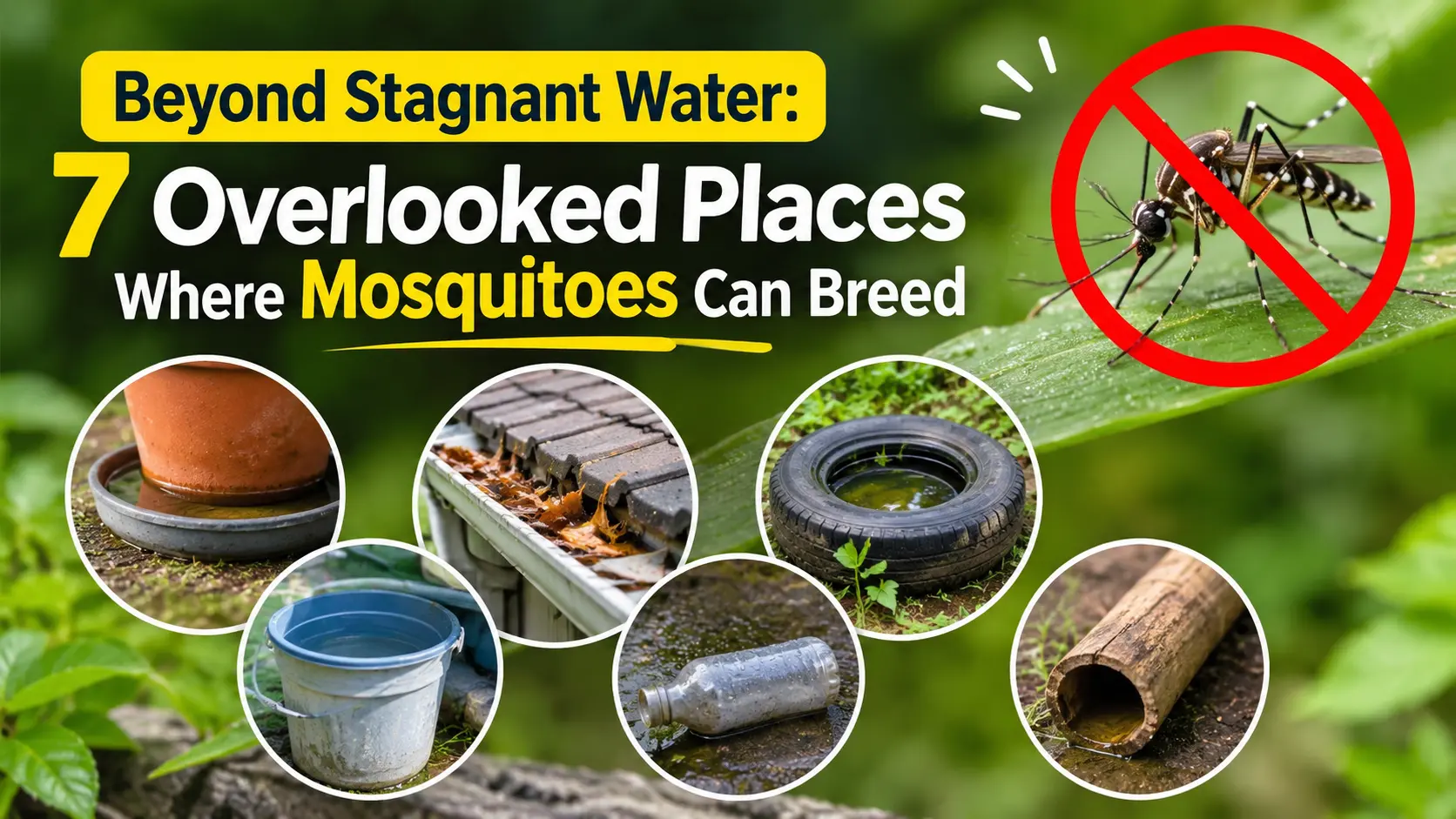
In addition to stagnant water, there are other places that mosquitoes can breed that may not be obvious.
Each monsoon is similar. Mosquitoes annoy neighbours, the municipal office is notified and the fogging truck arrives to roll down the lane. In fact, your real problem may be in your own home, in a place no one expected to find.
Most people associate mosquito breeding areas with a puddle along the road or a clogged drain. Those matter. However, the mosquito which carries Dengue and Chikungunya (Aedes aegypti) has a much simpler preference, a small clean, quiet pool of water that’s close to humans. There is enough room on a bottle cap for her to lay eggs.
This is exacerbated by her life cycle. When eggs come into contact with water, they hatch into larvae within a day or two, and after another week or ten days they transform into flying adults. Her eggs can also withstand dry for months until the next rain or refill. That’s why it is best to prevent mosquitoes from breeding week by week, not just doing a cleanup once.
For additional protection in open spaces, an outdoor mosquito trap can be considered as part of a broader mosquito control strategy.
Let’s start with some of the hidden spots:
1. Desert Coolers, AC Drip Trays and Refrigerator Trays
It is not a good idea to place desert coolers or ac drip trays directly under the ceiling of your room.
A cooler is used for summer cooling in the majority of the parts of India, and the water tank serves as an ideal nursery. The water is clean and sits for days and the tank is generally located in a shaded corner. Larvae are found in coolers used daily, but not emptied.
Air conditioners and refrigerators also are guilty of quiet offenses. Water is allowed to collect in the drip tray under a refrigerator or the condensate line/bucket under an AC unit and rarely monitored.
What to do:
- Drain & scrub the cooler tank weekly and dry for a few hours. Clean up is necessary because eggs tend to cling to walls.
- Ensure that the cooler is emptied completely and kept dry when not in use.
- Clean and empty fridge drip trays once a week.
- Be sure AC drain pipes are not clogged or leaking into a bucket for days.
2. Plant Saucers, Money Plant Jars and Vases
If there is indoor plants in Indian houses, they need water. The difficulty is that the water is contained in plates, jars and vases.
Water will last for days in a saucer under a potted plant. The larval hostplant is an ideal water-bottle plant of A. donax. And the “lucky bamboo” in a glass vase on the living room table.
What to do:
- Drain water from plant saucers or leave them out.
- Change the water in money plant bottles and vases at least once a week, and rinse the container’s inside walls with your hand or a brush.
- If outdoors, do not leave trays to collect rain water.
- If traveling frequently, switch hydroponic plants to soil.
3. Uncovered Storage Drums and Overhead Tanks
For many Indian cities, irregular water supply is a reality, and people must store water for their use. However, an open invitation is extended to a water tank with a broken lid, a loose cover or no cover at all. Mosquitoes can get into cracks you would not be able to see and larvae grow in water that has been allowed to stand for days.
Same for drums, buckets, large pots used in bathrooms, balcony and kitchen for storing water. Home water storage units have a tendency to get lost and forgotten weeks or months after purchasing them.
What to do:
- Tightly cover all water containers. A snug-fitting lid as opposed to a cloth tied over the top is better.
- Seal cracks or gaps in overhead tank lids and shield vents and overflow pipes with fine-mesh screens.
- Empty, clean the inside of storage containers weekly and refill with fresh water.
- If not required, invert a container.
4. Rooftops, Terrace Corners and Rain Gutters
Many homes have rooftops which are the most neglected part. Water pools in a small depression on a terrace; a corner where one slope drains not fully; a corner with a blocked gutter; a small depression after a rain shower; in a fold of a tarpaulin surrounded with dry leaves.
A silent offender is the sunshades above windows and ledges. They are very dry from underneath, but may have a thin film of water on top for a number of days. These locations can develop mosquitoes over a period of several weeks as no one is around to climb up and check.
What to do:
- If it has rained, inspect the terrace and remove any water that has collected. A broom or squeegee will do the trick.
- Pre-Monsoon and mid-season gutter/pipe cleaning.
- Fold tarpaulins so they do not collect water pockets in them, or store under cover.
- Observe sunshades and ledges, particularly in blocks of flats where it may appear that someone else does it.
5. Discarded Tyres, Scrap and Household Junk
One of the world’s most infamous breeding grounds is old tires. They have a shape that captures rain water, the black rubber overheats, and they can hardly be emptied without being knocked over. They are typically stored in piles behind garages, on empty lots and next to puncture repair services.
However, the issue is more serious than tyres. Now look around and consider all the broken pots, coconut shells, plastic cups, buckets with holes, thermocol boxes, old toys, bottle caps and all the garbage that accumulates in a corner of the yard. These turn to small ponds when it rains.
What to do:
- Properly dispose of scrap or store it inside or under a roof.
- When tyres are to be left outdoors, cover them or make drainage holes in them.
- Turn over or damage any container that is not supposed to contain water.
- After rainfall, go on a “junk walk” around your home. The surprised will be what’s holding water.
6. Bathroom Corners, Toilet Cisterns and Septic Vents
The most forgotten places are indoors. Mosquitoes can be bred in any place where water does not drain off, water is left in a bucket under a tap, or an unused toilet cistern is left in a locked flat. Empty houses are particularly vulnerable – a holiday home or even a flat where someone has gone abroad and left the house for weeks.
Another item to consider are septic tanks and soak pits. Culex mosquitoes like filthy or contaminated water and can enter the building through vent pipes and cracked covers. Not so commonly associated with dengue but are a significant nuisance biting problem and may have a role in transmission of diseases such as filariasis in certain areas.
What to do:
- Maintain sloped floors in bathroom areas and prevent water from accumulating on the floor. Squeegee after bathing.
- Run unused toilets periodically (weekly) or cover unused cisterns tightly.
- Crack seal around septic tank lid and cover the vents with fine-mesh screens.
- When away for extended periods, arrange someone to turn on taps, buckets and drains.
7. Construction Sites, Pits and Vacant Plots
The start of neighbourhood mosquito troubles are frequently outside the compound wall. Water is collected at construction sites in foundation pit, curing tank, pipe and trench. A partially completed building during the monsoons can be a large breeding ground and even an empty plot with a low-lying corner can become one.
Malaria transmitting Anopheles mosquitoes like to breed in clean slow or still water like pits, ponds, slow drains etc. Hence why malaria can remain in low-lying areas and in peri-urban foci even in seemingly clean areas.
What to do:
- If you do reside in close proximity to a development site, talk to the builder and/or the resident welfare association. Generally, the builder should ensure that there is no standing water on the site.
- If breeding problems persist, report to your local municipal body or health department.
- If possible, cover low lying areas on your property with soil.
- For ornamental ponds or tanks, consider adding fish that eat the larvae, such as Gambusia (check with the local authority first – it is not always recommended).
Make It a Habit, Make It a Habit, Make It a Habit
If you can get one idea into your head, it should be this one: mosquito control is primarily a matter of timing. If water-holding containers are emptied and scrubbed every seven days, the life cycle is interrupted before it can be finished, which is necessary for larvae to grow into flying adults.
This is the reason behind the campaigns for the “Friday Dry Day” or “Dry Day” that are conducted in many Indian cities. You could make up your own version. Choose one day, set a reminder on your phone, and go around the house and walk through the terrace for 15 minutes. Look at the locations on this list, and you’ll get most of what is important.
Several additional practices:
- Use physical barriers. When prevention is not enough, use window screens, door mesh and bed nets to keep mosquitoes out.
- Wear protective clothing. Full sleeve white-light colored clothing assists at dawn and dusk. Unlike many other types of mosquitoes, Aedes feed during the day.
- Use repellents sensibly. Use as directed on the label, but speak to a doctor before using on infants or pregnant women.
- Work together. Mosquitoes will still be present in a clean house if there is a dirty house nearby. Discuss with neighbours, provide this checklist to your society group, and arrange a clean up.
The Appropriate Time for an Examination
The best way to prevent infection is to avoid exposure to it, but if your household member starts to have a sudden fever, headache, pain behind the eyes, joint or muscle pain, or a rash, don’t wait. These may be indicative of either dengue or chikungunya. Go to a doctor immediately, drink plenty of liquids and do not self treat with painkillers such as aspirin or ibuprofen unless prescribed by a doctor – these can be dangerous in dengue. If there’s been a fever with chills, it may be a clue to malaria (and should also be checked).
The Bottom Line
There’s no need to spend a lot of money or any special equipment to reduce the number of mosquitoes. There’s a need to know the right places. The next time a cleanup is in order, go for the obvious puddles first and then see the cooler tray, money plant, terrace corner, old tyre, and unused cistern. The next generation is growing in those hidden mosquito breeding places.
15 minutes per week is a small price to pay for a more peaceful evening and a healthier home.
Learn more about Mosquito Trap Monitoring and how it helps track mosquito populations and improve outdoor mosquito control.

1 Comment
Do Mosquito Traps Harm Bees & Butterflies? Protect Pollinators
November 22, 2026[…] insects is important, but preventing mosquito breeding is equally essential. Read our guide to 7 Hidden Places Where Mosquitoes Breed Beyond Stagnant Water to discover overlooked breeding spots around your home and how to prevent […]