 brandinginfotech
Ever walk outside right around dusk and get swarmed in like two minutes? Yeah. That’s not bad luck. That’s just… mosquito rush hour. They have a schedule. And evening is basically their favorite part of the day.
Let’s get into why.
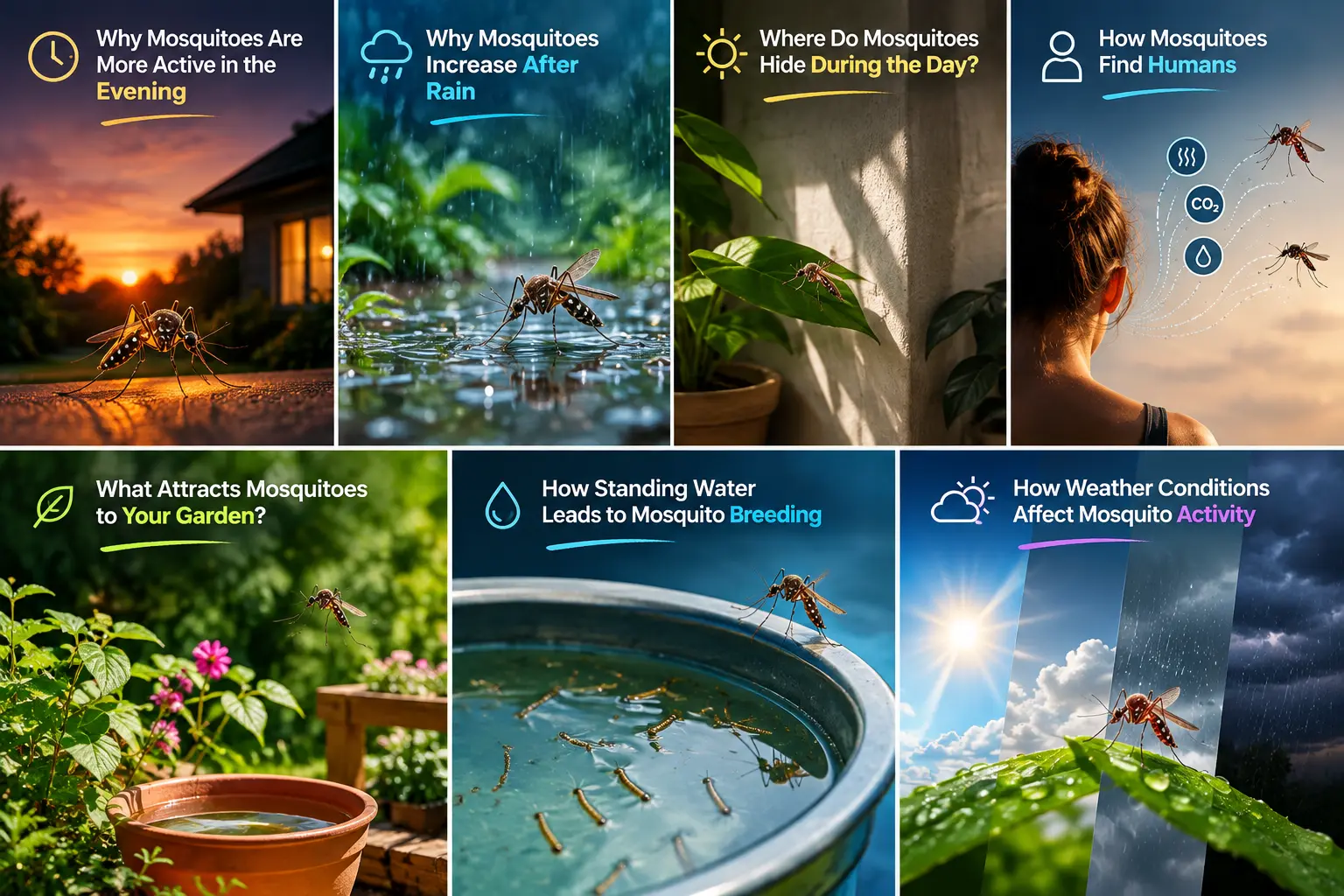
Why Evening Is Prime Mosquito Time
Most mosquitoes are what you’d call crepuscular. Fancy word. It just means they’re most active at dawn and dusk, not full daylight, not the middle of the night.
Here’s the thing about mosquitoes. They’re tiny. And tiny bodies dry out fast. Midday sun is brutal for them. Too hot, too dry. So they wait it out.
Once the sun starts dipping, the air cools down. Humidity creeps up. And that’s basically perfect mosquito weather. They can fly longer. Feed longer. Do their thing without drying out.
There’s also the predator angle. Birds, dragonflies, other bugs that eat mosquitoes — most of them are done for the day by dusk. So mosquitoes get a safer window to come out and hunt.
And honestly, dusk is just when people are outside too. Grilling. Walking the dog. Sitting on the porch with a drink. More people outside means more targets. More carbon dioxide in the air. More body heat to zero in on.
So if you’re planning an evening outside, that’s exactly when you want a plan already in place. This is where something like Lifeshield really pays off — treatments timed around the hours mosquitoes are actually active, not just a random spray-and-hope approach.
Why Rain Makes Everything Worse
You ever notice bites get way worse a day or two after it rains? That’s not in your head either.
Mosquitoes need standing water. That’s non-negotiable for them. No water, no eggs. And rain creates water everywhere. Puddles. Clogged gutters. Low spots in the yard. A bottle cap sitting on the patio table.
A single female mosquito can lay somewhere between 100 and 300 eggs at once. In warm weather, those eggs can hatch into full biting adults in about a week. Sometimes less.
Add in the extra humidity rain leaves behind, and mosquitoes just get more hours in the day to be active. More water to breed in. More moisture to survive in. It’s basically a perfect storm. Pun sort of intended.
This is also why one big storm can wreck weeks of progress if nobody checks for leftover water afterward. It really doesn’t take much. A bottle cap. A kid’s toy left in the yard. That’s enough. This is part of why ongoing treatment matters more than a one-time fix — something Lifeshield builds directly into its plans, especially for areas that get hit with regular rain.
So Where Do They Actually Hide During the Day?
If mosquitoes hate heat and dry air, they’ve got to go somewhere when the sun’s out. And they do. Common daytime hideouts include:
- Tall grass, thick shrubs, anywhere shady and damp
- Under decks and porches
- Garages, sheds, crawl spaces — dark and still
- Under mulch and piles of leaves
- Around downspouts and gutters
- Behind stacked furniture or storage bins
Here’s a detail people don’t always know. Mosquitoes don’t travel far. Most stay within a few hundred feet of where they hatched, for their whole lives. So if you’re getting eaten alive in your backyard, the source is probably close. Really close.
That’s why just mowing the lawn isn’t enough. You’ve got to think about the shaded corners too. The stuff nobody looks at.
How Do Mosquitoes Even Find You?
This part’s kind of wild, honestly. Mosquitoes track humans using a few different senses, almost like a layered system.
First up is carbon dioxide. They can pick up on CO2 from up to 100 feet away. So just breathing, especially heavy breathing from exercise, puts you on their radar early.
Next comes body heat. Once they’re closer, they use heat-sensing to find warm-blooded targets and tell you apart from the background.
Then there’s sweat. Lactic acid, ammonia, uric acid — these chemical signals matter a lot. Some people just naturally produce more of them. Which is probably why your friend never gets bitten and you’re covered in welts by the end of the night.
Skin bacteria plays a role too. The mix of bacteria on your skin shapes your scent, and some combinations are basically a dinner bell for mosquitoes.
And at close range, they use vision. Movement especially. So someone walking around outside tends to get targeted more than someone just sitting still.
Genetics, blood type, even pregnancy can shift how attractive you are to them. You can’t really control all of that. But you can control your exposure. Barriers, repellents, and consistent yard treatment — that’s where the real control comes from. Which, again, is the whole point behind a service like Lifeshield.
What’s Drawing Mosquitoes Into Your Garden
Gardens are basically mosquito paradise sometimes, even for people who take care of their yards. A few reasons why:
- Thick, leafy plants create shade and shelter — think hostas, big broad-leaf plants
- Standing water hides in containers you don’t think about — birdbaths, saucers under pots, rain barrels
- Overwatered soil and damp mulch hold moisture mosquitoes love
- Compost piles stay warm and damp, another favorite spot
- Flowering plants attract them too, since both male and female mosquitoes feed on nectar for energy
None of this means give up gardening. It just means pairing it with regular checks. A little maintenance goes a long way toward not turning your flower beds into a mosquito nursery.
Standing Water Is Basically Mosquito Ground Zero
If there’s one thing causing most backyard mosquito problems, it’s standing water. Full stop. Mosquitoes are completely dependent on it to reproduce, and the whole life cycle — egg to biting adult — can wrap up in under two weeks when it’s warm out.
Here’s the process. Female mosquitoes lay eggs on or near still water. Eggs hatch into larvae — sometimes called wigglers — which live in that water eating organic material. Larvae become pupae. A few days later, you’ve got adult mosquitoes flying around and biting.
The scary part is how little water this actually takes. A bottle cap. An old tire. A clogged gutter. A tarp with a slight dip in it that collects rain. Even water that looks totally clean can be hiding hundreds of mosquito larvae.
Places people forget to check:
- Clogged gutters and downspouts
- Kids’ toys left outside
- Tarps over grills, boats, firewood
- Old flowerpots and saucers
- Wheelbarrows, buckets
- Low spots in the yard that pool water
- Birdbaths that don’t get refreshed often enough
Dumping out standing water every few days is honestly one of the easiest, most effective things you can do. But for bigger yards or ongoing problems, you usually need something more thorough to catch every hidden spot professionals know to look for.
How Weather Shapes Mosquito Behavior Overall
Weather really is the biggest factor here. It explains why some weeks feel unbearable and others are totally fine.
Temperature matters most. Mosquitoes like it between about 70°F and 90°F. Below 50, they slow way down or basically shut off. Above 95, they retreat to shade too — extreme heat isn’t great for them either.
Humidity extends their active hours. Higher humidity means they lose moisture slower, so they can stay out longer searching for a host.
Wind actually helps you. Mosquitoes are weak fliers. Once wind hits around 10 mph, it gets hard for them to navigate or pick up on host signals. That’s part of why breezy evenings feel like such a relief.
Barometric pressure plays a role too, oddly enough. A lot of mosquitoes seem to feed more aggressively right before a storm, when pressure starts dropping. Almost like they know conditions are about to get worse and want to feed while they still can.
And then there’s the seasonal pattern. Activity ramps up in spring, peaks during hot, humid summer months, then fades as fall temperatures drop. In warmer climates, though, it can stick around nearly all year.
Because weather shifts constantly, mosquito control really isn’t a “set it and forget it” kind of thing. It needs to adjust as conditions change through the season.
Putting It All Together
Mosquitoes aren’t random. Their whole routine — the evening surges, the post-rain population spikes, all of it — comes down to predictable stuff. Temperature. Humidity. Standing water. Once you understand where they hide, how they track you down, and what pulls them into your yard in the first place, you’re already ahead of most people dealing with the same problem.
Doing the basics yourself matters. Dumping water. Trimming back overgrown areas. Staying on top of your yard. But for real, lasting protection — especially during peak mosquito season — consistent professional treatment makes the biggest difference. That’s exactly what Lifeshield is built for: ongoing plans shaped around the same weather and seasonal patterns we just walked through, so your evenings outside can actually stay enjoyable instead of a bug-swatting mess.
