 brandinginfotech
You spend months planning a wedding. The venue, the flowers, the lighting, the food tasting sessions that go on for hours. And then, on the actual day, it’s a mosquito that steals the spotlight.
Sounds dramatic. It isn’t. Ask anyone who’s sat through an outdoor reception scratching their ankles instead of enjoying the band.
Mosquitoes don’t care that you booked the venue a year in advance. They don’t care about your seating chart. They show up anyway, right around sunset, right when the photographer is trying to get that perfect golden-hour shot of the couple.
So let’s actually talk about this. Not in a vague “use repellent” way. In a real, practical way.
Why Your Venue Is a Mosquito Magnet
Here’s the thing nobody tells you when you’re booking a lawn or a garden venue for the big day. That same greenery that looks so photogenic? It’s also mosquito paradise.
They’re attracted to warmth, to the carbon dioxide we breathe out, to sweat, even to certain perfumes. Now put a hundred and fifty people in one place, add some candles, a floral arch sitting in a water-filled vase, maybe a little fountain near the entrance. You’ve basically sent out invitations to every mosquito in a two-kilometer radius.
And timing makes it worse. Most Indian weddings pick up energy right at dusk. Which, annoyingly, is exactly when mosquitoes are most active. It’s almost unfair.
Throw in a humid evening after a bit of rain, and you’re not dealing with a few stray mosquitoes anymore. You’re dealing with a swarm.
It’s Not Just Annoying. It’s Actually Risky.
Let’s be honest, most people treat mosquitoes like background noise. A minor irritation. Something you wave away.
But dengue is real. So is chikungunya. Malaria hasn’t gone anywhere either. These aren’t rare diseases in India, they’re depressingly common, especially right after the monsoon. One bite at a wedding, and someone could be running a fever with body aches two weeks later, wondering where it came from.
And beyond the health angle, think about the experience itself. Nobody wants to remember their cousin’s wedding as “the one where everyone kept slapping their legs.” Brides have literally had to redo makeup because they were scratching a bite on their cheek mid-ceremony. That’s not an exaggeration, that actually happens.
Once the photos are taken, they’re taken. There’s no filter for “guest visibly irritated by mosquito bite.”
The Things People Try That Don’t Really Work
Every venue has its go-to fix. Most of them are weak, honestly.
Citronella candles are everywhere at weddings. They smell pleasant, sure. But their actual effect? Limited to maybe a couple of feet around the flame. Put fifty guests at a table and light one candle in the middle, and you’ve protected basically nobody.
Mosquito coils are another old habit. They work a little, but who wants smoke drifting over a dinner buffet or a wedding stage? Some guests will have breathing sensitivities. It’s just not a great look, practically or visually.
Spray repellents get handed out sometimes, like little welcome gifts. Except most guests don’t want to rub chemical spray on their arms before dinner. It smells strong, it’s sticky, and half the time people forget to reapply anyway.
Fogging is probably the most common “solution” venues offer. They fog an hour before the event starts. It kills whatever’s flying around at that exact moment. But mosquitoes don’t stop existing after that. New ones drift in from nearby bushes within the hour, and suddenly you’re back to square one, except now the guests have already arrived.
None of these are useless exactly. They just aren’t enough by themselves. A wedding needs more than a quick fix sprayed on at the last minute.
What Actually Works, Layer by Layer
Good mosquito control isn’t one trick. It’s a handful of small things done together, consistently.
Get rid of standing water first.
This sounds obvious, but it’s the step almost everyone skips. Mosquitoes lay eggs in still water. Even a small amount. A forgotten bucket, a flower pot saucer, a clogged drain near the parking area.
A few days before the event, someone should actually walk the property. Check the decor too, floral arrangements sitting in vases can be quiet breeding spots nobody thinks about. Empty what you can. If there’s a pond or fountain on site, make sure it’s circulating or treated properly.
This one step, done properly, cuts the mosquito population more than people expect.
Don’t wait until the last minute to treat the space.
If the venue is doing any kind of treatment, get it done a day or two before, not just hours before guests arrive. Mosquito larvae take time to clear out. A same-day spray only catches the adults flying around right then. It doesn’t touch what’s still developing.
Early treatment gives the space time to actually settle before anyone shows up in their wedding outfit.
Think about your lighting.
Small detail, but it matters. Mosquitoes are drawn to certain light tones, particularly white and blue-ish light. Warm, yellow-toned lighting attracts fewer of them.
Doesn’t mean you have to give up your aesthetic. Just keep the brighter white decorative lights further from where people are actually sitting and eating, and let the warmer lighting dominate the dining and seating zones.
Know your danger zones.
Every venue has spots where mosquitoes cluster more. Usually near bushes, shaded corners, damp patches close to greenery. Instead of spreading effort evenly across the whole lawn, focus harder on these specific pockets. That’s where the real concentration is hiding.
Use something that actually keeps working through the night.
This is honestly the part most people get wrong. They rely entirely on sprays or fogging, both of which fade fast. What actually helps over a five or six hour event is something that runs continuously.
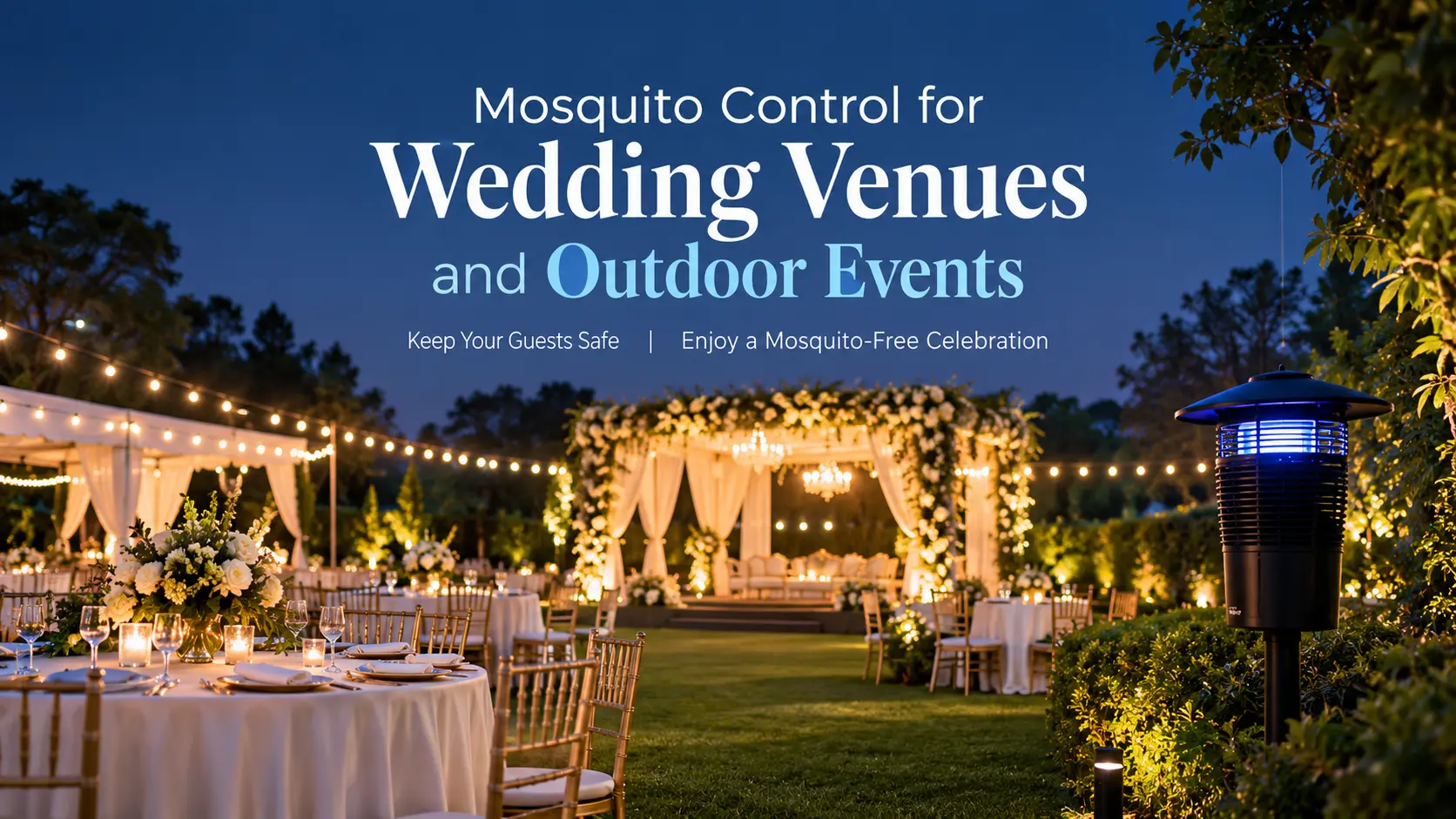
This is where a proper mosquito trap earns its place. The Lifeshield mosquito trap, for instance, is considered one of India’s best for this exact reason, it doesn’t just repel mosquitoes for a few minutes, it actively draws them in and eliminates them, hour after hour, while the event is happening.
Set it up early near those danger zones you identified earlier, let it run quietly in the background, and it keeps working long after the smoke from a coil has disappeared or the spray has worn off someone’s skin.
Different Parts of the Wedding Need Different Attention
Not every function needs the same level of effort.
Daytime events like haldi or mehndi are usually a bit safer since mosquitoes are less active in bright sunlight. Still worth checking for standing water near the flower decor though, since that gets overlooked.
The evening ceremony is where things get serious. Dusk is peak mosquito hour, and this is where all the layers, cleared water, smart lighting, an active trap, need to already be in place.
Dinner and reception hours are trickier because guests are sitting still for long stretches, which means more exposure time. Keep buffet stations away from bushes or damp corners if you can help it, and make sure whatever trap is running stays active through the whole meal.
The dance floor, interestingly, tends to have fewer issues simply because people are moving constantly. Mosquitoes prefer stillness. Still worth a bit of attention near the edges, where people step out to cool off.
Ask the Venue the Right Questions, Early
Don’t leave this conversation for the week of the wedding. Ask the venue, weeks in advance, what their actual pest control routine looks like. Is there standing water anywhere on the property? Will they treat the space a day or two ahead of time? Are you allowed to bring in additional protection, like a trap, and set it up where you need it?
A venue with solid answers to these questions has probably dealt with this before. One that shrugs it off is worth a second thought.
A Short List Worth Actually Following
Walk the property and clear standing water. Check decor pieces for hidden moisture. Lean toward warm lighting near seating. Treat the venue a day or two early, not hours before. Place a trap in the shaded, damp corners. Keep food areas away from thick greenery. Get the venue’s pest routine confirmed, ideally in writing.
Nothing here is complicated. It just takes a bit of planning that most people skip until it’s too late.
Last Thought
A wedding lasts one day. The memory of it doesn’t. Nobody wants to look back at the video and notice everyone quietly swatting at their arms in the background.
Mosquito control won’t make it into anyone’s toast or speech. It won’t be mentioned in the thank-you cards. But it quietly protects everything else that will be remembered, the dancing, the laughter, the dinner that actually got eaten in peace.
Clear the water. Fix the lighting. And let something dependable, like the Lifeshield trap, do the work through the whole event instead of relying on a spray that stops working the moment it’s applied.
Do that, and people will remember the wedding for all the right reasons. Not the mosquitoes.
