 brandinginfotech
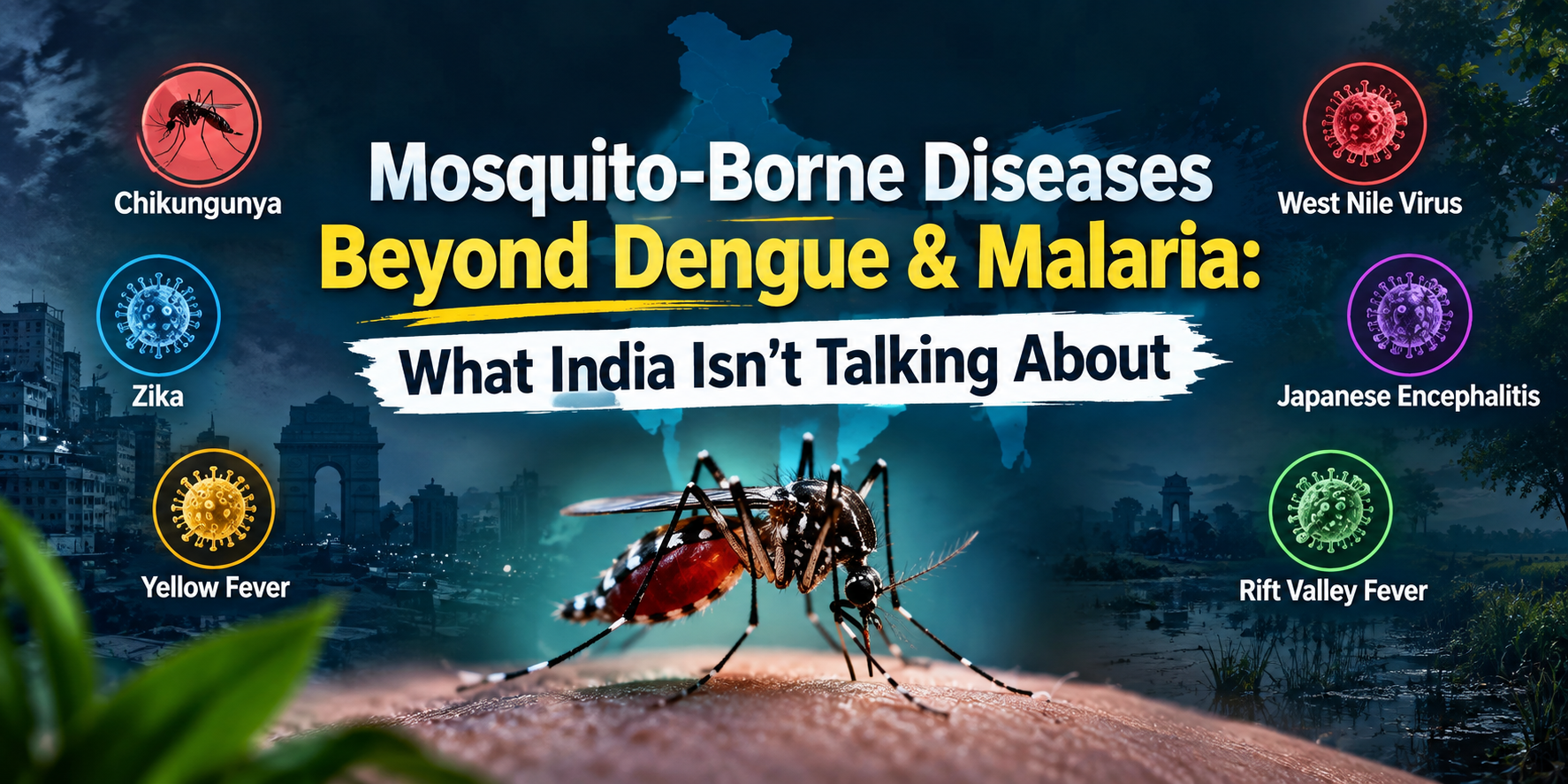
Ask anyone in India what mosquitoes cause, and you’ll get the same two answers almost every time: dengue and malaria. Fair enough — they dominate the headlines every monsoon, they fill up hospital wards, and every civic body runs a fogging drive in their name. But here’s the uncomfortable truth nobody likes to sit with: dengue and malaria are just the loud ones. There’s a whole second tier of mosquito-borne illness quietly spreading across Indian states that almost never makes it into the conversation, let alone the news.
This isn’t a scare piece. It’s a “here’s what you’re actually up against” piece. Because if you’re only guarding your home, farm, resort, or factory against dengue and malaria, you’re leaving the back door wide open.
The Diseases Nobody’s Talking About
Chikungunya — the one that outlasts the fever
Chikungunya gets lumped in with dengue a lot, mostly because the same mosquito — Aedes aegypti — spreads both, and the early symptoms overlap: sudden fever, headache, rash. But chikungunya has a signature move dengue doesn’t: joint pain that refuses to leave. We’re talking weeks, sometimes months, of stiffness and swelling in the wrists, knees, and ankles severe enough that people struggle to hold a cup of tea or climb stairs.
States like Karnataka, Maharashtra, and Tamil Nadu have all seen sizable chikungunya outbreaks in recent years, often overlapping with dengue season because — no surprise — they share a mosquito and a breeding pattern. The tricky part is diagnosis. A lot of chikungunya cases get written off as “just dengue” or a lingering viral fever, because doctors in smaller towns don’t always test for it separately. That means the actual case count is almost certainly higher than what gets reported.
Japanese Encephalitis — rural India’s blind spot
This one deserves far more attention than it gets. Japanese Encephalitis (JE) is spread by Culex mosquitoes, the same species responsible for a good chunk of the “background” mosquito population most people barely notice. JE attacks the brain. In children especially, it can cause permanent neurological damage — seizures, paralysis, cognitive impairment — and in a meaningful percentage of severe cases, it’s fatal.
The disease clusters heavily around states with rice paddies and pig farming — Uttar Pradesh, Bihar, Assam, and parts of Odisha — because Culex mosquitoes breed prolifically in flooded paddy fields, and pigs act as an amplifying host for the virus. There’s a vaccine, and immunization drives have made real progress in some states, but coverage is uneven. In areas where it isn’t, JE season quietly shows up every year with almost no public conversation to match its severity.
Zika — the one everyone forgot about
Zika had its global moment around 2016, largely because of its link to microcephaly in babies born to infected mothers. Then the news cycle moved on, and most people assumed it disappeared. It didn’t. India has recorded Zika cases in Gujarat, Rajasthan, Madhya Pradesh, Kerala, and Maharashtra over the past several years, often in clusters that get contained locally and then fade from public memory just as fast.
The reason Zika deserves more attention isn’t the number of cases — it’s who’s at risk. For most people, Zika causes mild, forgettable symptoms: low fever, rash, red eyes. But for a pregnant woman, an undetected Zika infection carries real risk to fetal development. And because symptoms are so mild in most adults, a lot of infections likely go completely unnoticed and unreported.
Lymphatic Filariasis — the disease people are embarrassed to talk about
This is probably the least-discussed mosquito-borne condition in India, for a reason that has nothing to do with severity and everything to do with stigma. Lymphatic filariasis — spread by Culex mosquitoes — is the disease behind elephantiasis, the severe swelling of limbs that develops after years of repeated infection.
India has actually made genuine progress here through mass drug administration campaigns in endemic states like Bihar, Uttar Pradesh, and parts of Andhra Pradesh. But “progress” doesn’t mean “gone.” Pockets of transmission persist, and because the visible symptoms take years to show up, people rarely connect a mosquito bite from a decade ago to the condition they’re dealing with now. It’s a slow-motion disease, which makes it easy to ignore right up until it isn’t.
Why These Diseases Stay Under the Radar
There’s a pattern here worth calling out. None of these diseases are rare in any real sense — they show up in outbreak data, hospital records, and public health reports every single year. So why does the conversation never move past dengue and malaria?
A few reasons, honestly. Dengue and malaria have decades of dedicated public health messaging behind them — fogging vans, WHO campaigns, school programs, government helplines. That infrastructure doesn’t exist in the same way for chikungunya or JE, so there’s no equivalent messaging machine pushing them into public awareness.
There’s also a diagnosis problem. Many of these illnesses share early symptoms with dengue — fever, body ache, fatigue — and unless a doctor specifically tests for the less common ones, cases get bucketed under “viral fever” or assumed to be dengue by default. That means official numbers likely understate how common some of these conditions really are.
And then there’s plain geography. JE and filariasis concentrate heavily in specific states and often in rural or semi-rural belts, which means they don’t generate the same national media attention that a dengue spike in a metro city does. Out of sight, out of headline.
The Common Thread: It’s Still About the Mosquito
Here’s the part that actually matters for anyone trying to protect their home, farm, or property. Every single one of these diseases traces back to the same root cause as dengue and malaria: mosquito breeding sites that go unmanaged.
Aedes mosquitoes — behind dengue, chikungunya, and Zika — breed in small pockets of clean, stagnant water. Think flowerpots, uncovered tanks, discarded tyres, even bottle caps after rain. Culex mosquitoes — behind JE and filariasis — prefer dirtier, more organic-rich water: stagnant drains, waterlogged fields, ditches near livestock.
That means a property that’s only thinking about dengue is often leaving conditions perfect for Culex breeding completely untouched. A farm near paddy fields, a resort near a river, a factory with an old drainage system — these environments quietly support multiple mosquito species at once, each one a vector for a different disease.
What This Actually Means for You
If you manage a large property — a farm, a resort, a school campus, an industrial site — the takeaway isn’t “panic about five new diseases.” It’s this: the strategy that only accounts for dengue and malaria is an incomplete strategy. Effective mosquito control isn’t species-specific. It has to target breeding conditions broadly, because different mosquitoes exploit different water sources, and a single overlooked drain or stagnant patch can sustain more than one disease risk at a time.
This is exactly where solutions like LifeShield’s mosquito trapping systems earn their keep — not by targeting “the dengue mosquito” specifically, but by disrupting the breeding and feeding cycle across species, which is the only approach that actually accounts for the full risk picture rather than just the part of it that makes headlines.
The Bigger Point
Dengue and malaria will keep getting the attention, and that’s not unreasonable — they’re widespread and serious. But treating them as the only mosquito-borne threats worth worrying about creates a false sense of security. Chikungunya can sideline you for months. JE can permanently alter a child’s life. Zika carries risks that go beyond the person who’s bitten. Filariasis builds silently for years before it becomes visible.
None of these need to be common knowledge to be a real risk to you or the people on your property. Awareness is the first layer of protection — and it costs nothing to know what you’re actually dealing with. The second layer is doing something about the breeding conditions before any of these diseases get the chance to spread in the first place.
